Dental Health in Dogs and Cats: Why Oral Hygiene Is So Important 🦷
Let’s be honest: how often do you check your four-legged friend’s mouth? While grooming, exercise, and nutrition are part of many owners’ daily routines, dental health is often overlooked. Yet, tooth and gum diseases can be not only bothersome but also painful.
The problem is that dogs and cats don’t always clearly show when they have a toothache. That’s why it’s even more important to recognize changes early and keep a close eye on their dental health.
- ⚠️ Common warning signs: severe bad breath, red or bleeding gums, tartar, excessive drooling, or chewing only on one side.
- 🦷 Common diseases: gingivitis (inflammation of the gums), periodontitis, and FORL (painful loss of tooth structure in cats).
- 🪥 The best prevention: regular brushing with pet-specific toothpaste and chew toys for mechanical cleaning.
- 🩺 Veterinary checkup: Have your pet undergo a veterinary checkup, including a dental exam, at least once every 12 months.
- 🛡️ Simpego coverage: Depending on the plan you choose, Simpego pet insurance covers treatment for dental accidents and diseases and helps cover the costs of preventive tartar removal.
A Healthy Mouth: What You Need to Keep in Mind 🔍
Just take a look at your four-legged friend’s mouth to get an idea of their dental health. Healthy gums are usually pink, fit snugly against the teeth, and are neither visibly swollen nor red. They shouldn’t bleed when you touch them or when your pet chews.
You should also have your teeth checked regularly. Slight changes in color aren’t necessarily a cause for concern, but if you notice visible plaque or tartar, it’s best to have them checked.
Even particularly strong bad breath—or bad breath that suddenly gets worse—can be a sign that something is wrong in your mouth.
When Plaque Becomes a Problem
After eating, a soft film forms on the teeth, consisting of various substances, including bacteria. If this film is not removed regularly, it can harden over time and turn into tartar.
Tartar isn’t just a cosmetic problem. Plaque and bacteria can irritate the gums and lead to gingivitis, which is an inflammation of the gums. Typical symptoms include red, swollen gums or gums that bleed easily. You may also notice particularly bad breath.
If gum inflammation is detected early and its cause is treated, the gums can heal. If, on the other hand, the inflammation persists for a prolonged period, it can spread further and compromise the teeth’s supporting structures.
When Gingivitis Progresses to Periodontitis
In cases of periodontitis, the disease no longer affects only the gums, but also the structures that anchor the teeth to the jawbone. As the disease progresses, gum pockets may form, the tooth-supporting structures may be damaged, and the teeth may lose their stability.
These changes are not entirely reversible. That is why it is even more important to recognize gum inflammation early and treat it.
Another problem is that dogs and cats often hide oral problems for a long time. Even animals with obvious dental issues can continue to eat. So just because your four-legged friend is eating normally doesn’t automatically mean that his teeth are healthy or that they aren’t causing him pain.
From Dental Plaque to FORL: The Most Common Dental Diseases ⚠️
In addition to gingivitis and periodontitis, dogs and cats can develop other oral diseases and conditions.
Broken or Damaged Teeth:
Whether while playing, chewing, or as a result of an accident, a tooth can become damaged or break. Depending on which parts of the tooth are affected, this can be very painful and may require treatment.
Inflammation in the area around the tooth root:
Not all dental problems are immediately visible from the outside. Inflammation can also occur in the area around the tooth root, causing discomfort.
FORL in cats:
FORL is a particularly serious dental disease in cats. In this condition, the tooth structure is gradually eroded. The damage can be very painful, and it is often necessary to extract the affected teeth.
FORL is a prime example of why seemingly normal teeth don’t automatically mean everything is fine. Some abnormalities may be hidden beneath the gums and aren’t always detectable without a proper veterinary examination.
Does my pet have a toothache?
It’s not always easy to answer this question. Many animals show symptoms of mouth pain only at an advanced stage, or their behavior changes in ways that are very subtle.
It’s particularly important to know that even an animal with a toothache may continue to eat.
Pain Management: Does My Pet Have a Toothache? 🩺
Since our four-legged friends instinctively tend to hide their pain, you should pay attention to even the slightest changes in their behavior:
- unpleasant or increasingly strong breath
- red or bleeding gums
- visible tartar
- increased salivation
- Food that falls out of your mouth while you’re eating
- chewing more cautiously or in an unbalanced manner
- sudden preference for soft foods
- Sensitivity to touch in the head and muzzle area
- Withdrawal or Other Behavioral Changes
These symptoms can have various causes and should be evaluated by a veterinarian.
Dental Hygiene in Everyday Life: What You Can Do at Home 🪥
It’s best not to wait until tartar forms before you start taking care of your teeth. Many dogs—and even cats—can gradually get used to having their teeth brushed regularly.
For dental hygiene, you should only use products designed for animals. Toothpaste meant for people should not be put in the mouths of dogs or cats.
In addition, there are several products that can help with dental care, such as special chewable treats or other dental hygiene products. However, they are not a substitute for brushing or any necessary veterinary treatment.
Regular checkups at the vet are also important. This way, any changes that may not have been noticed at home yet can be detected.
A toothless cat: Is that even possible? 🐱
Especially in cases of diseases such as FORL, it may be necessary to extract several teeth. In the most severe cases, a cat may lose most of its teeth—or even all of them.
For many pet owners, this idea seems terrible at first:
- How does my cat eat without teeth?
- And after all that, will he still have any quality of life?
The good news is that cats are surprisingly good at adapting to life with few teeth or even none at all.
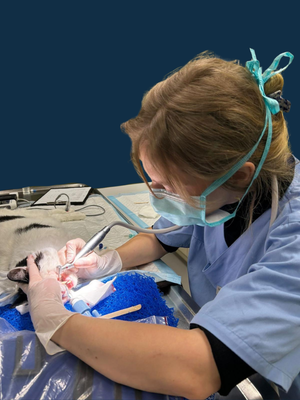
It’s not just the number of teeth that matters, but above all whether the animal is in pain. If the teeth are affected by a chronic condition and cause pain, removing them can significantly improve the animal’s quality of life. Once they’ve fully recovered, many cats do just fine in their daily lives.
Depending on your cat’s individual situation, it may be helpful to make some changes to its diet. You can discuss with your veterinarian what’s best for your cat.
A pain-free mouth, with few or no teeth, can be much more comfortable for a cat than a full set of teeth that cause chronic pain.
Comprehensive dental coverage 🛡️
Many dental problems develop gradually and, as a result, go unnoticed for a long time. Regular dental care at home and checkups at the vet can help you detect any changes as early as possible.
That’s why you should always check your four-legged friend’s teeth and gums. Bad breath, red gums, visible tartar, or changes in eating habits shouldn’t simply be dismissed as normal signs of aging.
The sooner changes are identified, the sooner the cause can be determined and, if necessary, treated.
Here’s what our customers have to say about simpego pet insurance
Discover Simpego’s Petclub